After six years of living in the south, you've never seen anyone more ready for some real winter weather. You can imagine how I felt when I heard the brittle tapping of ice on the roof last week.
Alas, it was gone within a few hours, but it was great to crunch through a field and admire the view.
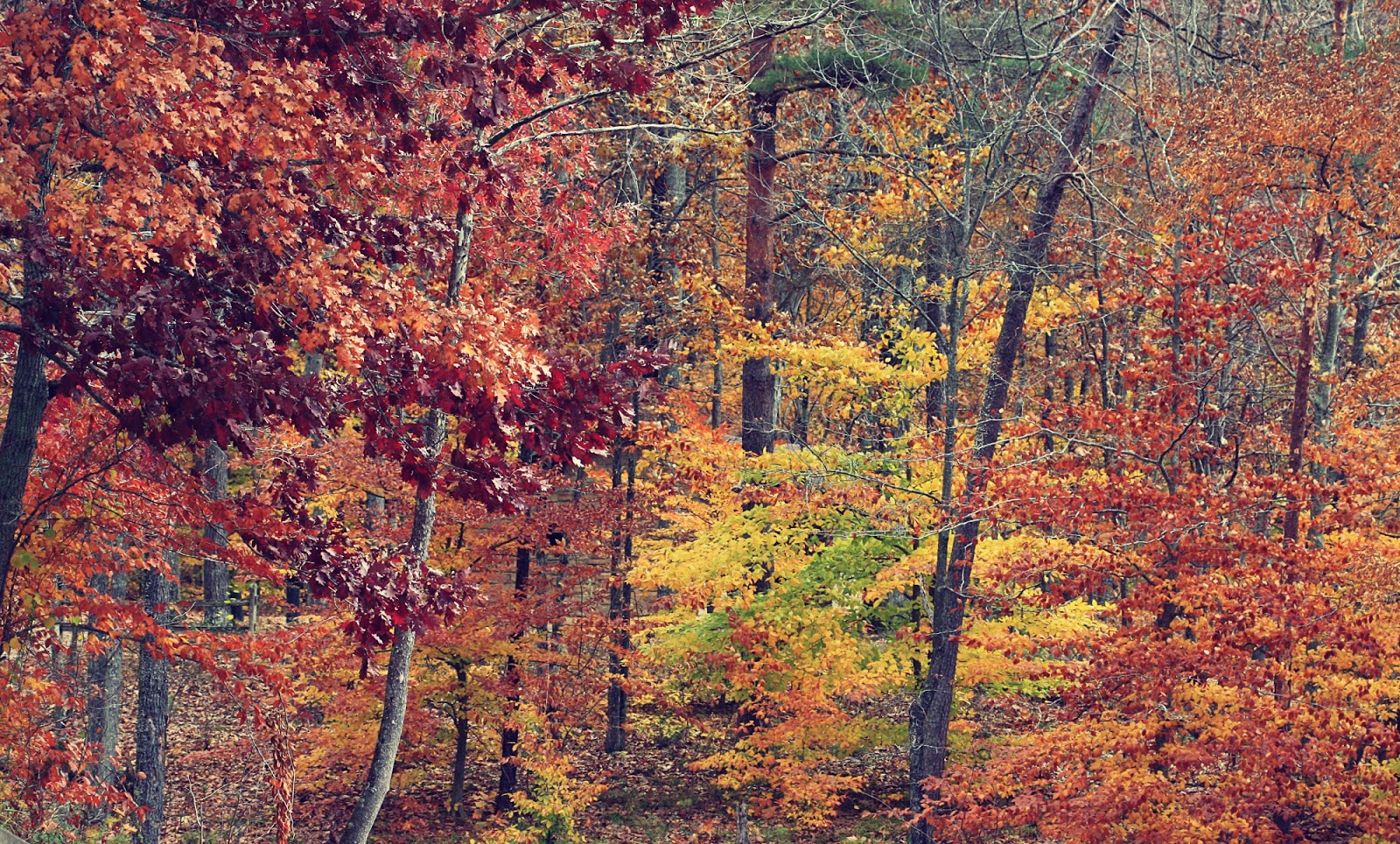
Call me crazy, but I have missed these scenes:
There's a Danish word called hygge that translates roughly into "winter cozy and contentment." It's apparently become a big deal in the U.S. lately, but I can safely say that I've been hygge-ing for as long as I can remember. Flannel pjs and sheets, homemade quilts and hand-knitted sweaters, hot water bottles, winter baking (bread!), cozy fires, candles, seasonal fabrics, knitting in my lap...the colder it is outside, the more delightful it is to be inside. Living in a three-season climate made me feel so out of sorts, so I am loving everything about the cold so far, being back home again in Indiana.
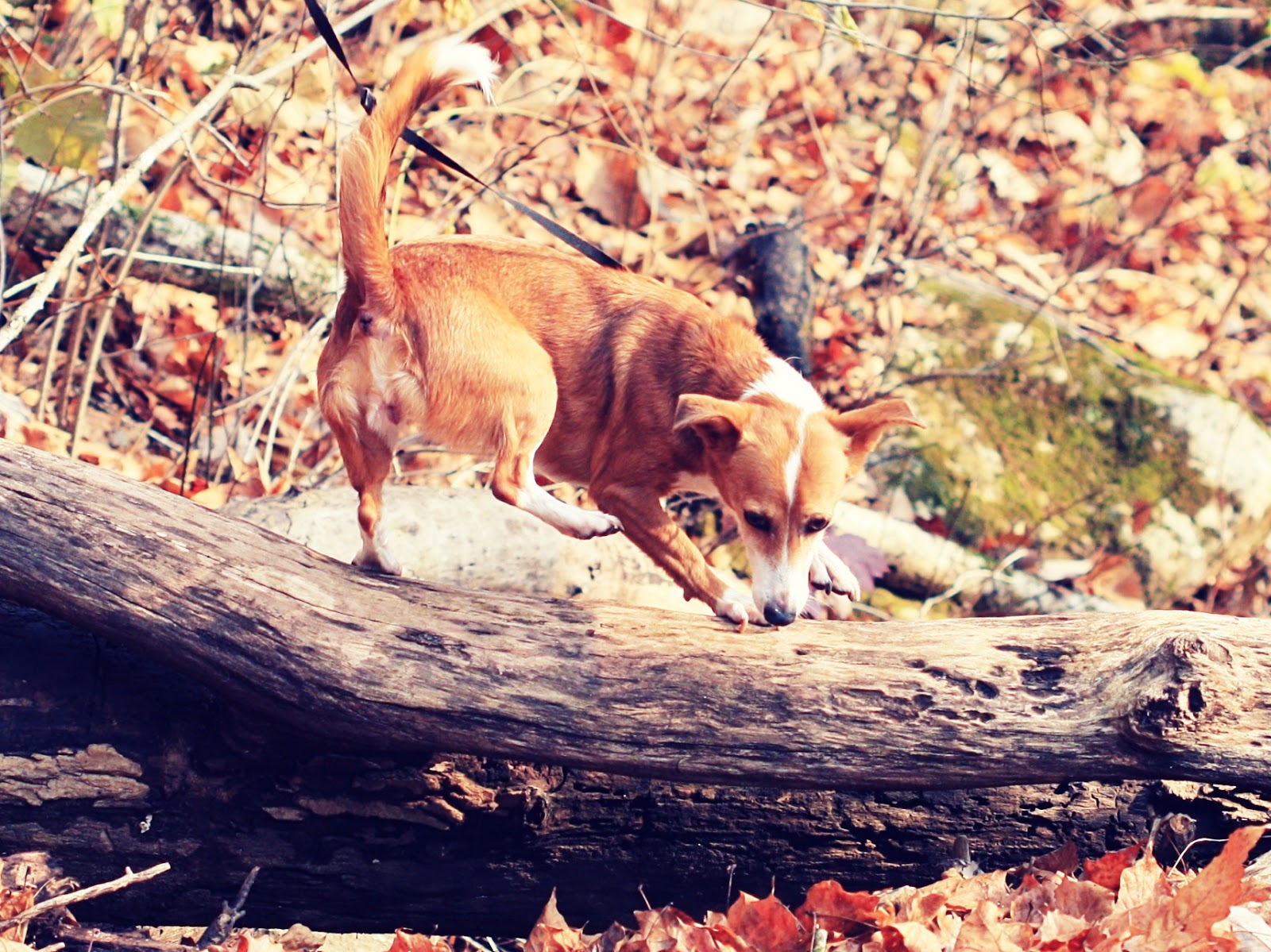
After the ice melt, Borga was ready to get back to business.
I was pleased to spot this female downy woodpecker. The males have a red patch on their heads, so it's easy to tell the difference. See how she's using her tail to brace against the tree for support?
Speaking of birds, I found an old warbling vireo nest on the same hike.
Warbling vireos are one of the many small, dull-colored birds that you probably haven't seen but have heard a thousand times in the woods. "Fresh as apples and as sweet as apple blossoms comes that dear, homely song from the willows," said William Dawson, early ornithologist, while birder Pete Dunne had a more colorful observation: "[It] sounds like a happy drunk making a conversational point at a party." That makes me smile!
I also saw a fairly large tree burl.
This deformation is caused when the tree experiences some sort of stress...fungus, insect incursion, etc. It doesn't really hurt the tree...I think it's rather like a scab. They can take decades to reach their full size, and some are incredibly enormous...in coastal redwoods, burls can grow up to 26 feet! Burl wood is prized for its odd, twisty patterns and has been made into jewelry, furniture, and sculpture.
I'm seeing a lot more dried seed heads. I think they're so pretty.
I love how I see something new on every hike. We're headed out again in a few hours, to get in some miles before a big Thanksgiving meal with friends.
Have a great day!
Thursday, November 22, 2018
Monday, November 12, 2018
a tale of three sweaters
Now that we have bona fide cold weather, I thought I would mention some recent discoveries. I'm always pretty cold, so when we've winter-hiked in the past, I've bundled up in sweats and bulky jackets and still felt chilly. It took a little research to figure out what I was doing wrong. Now I start with very close-fitting thermal underwear. I layer running tights and then felt-lined tights over the top. Very toasty. 100% wool socks and Columbia hiking boots, both reasonably priced. Over my close-fitting thermal top, I layer another thermal shirt in a size up. Finally, I put on a fleece pullover. Now I'm much warmer than when I was wearing a ton of loose layers before, and I don't feel like that kid on A Christmas Story in his bulky clothes, despite being so layered.
I wear silk glove liners under fleece flip-top mittens. Silk wicks away moisture, and the flip-top mittens keep my hands warm but still allow me to take pictures when we hike. I knitted a 100% wool cowl that I can wrap three times around my neck. I wear a hand-knitted hat, 100% wool, and ear muffs OVER the hat for easy removal if I get warm. We hiked this weekend in below-freezing temps and I was extremely comfortable. I just ordered a pair of fleece-lined but slim-fitting snow pants to wear over my 3 pairs of tights when it gets really cold. Do I pile on more than probably 95% of the people who are out there winter hiking? Probably. But I have to work with my comfort level. This works for me.
I'm glad we got out this weekend, because it was really nice. Most of the leaves have fallen, except for a few stubborn trees.
We had a bare dusting of snow that remained in some places.
I spotted some tracks on a log. Some squirrel dashed across at some point in the night.
Ice!
With ice comes the customary trapped bubbles. So what causes this?
Believe it or not, these bubbles are flammable. Methane gas from decaying plant material at the bottom of the pond rises to the surface and is trapped by the ice. These bubbles are small, but I found a great video that shows what happens when you release and ignite the gas from much larger bubbles. So cool!
There's a marshy area near this particular trail with lots of cattails. They've reached the seed-spreading part in their reproductive cycle, hence the fluffy tops.
I've seen plenty of cattails in my lifetime, but I never realized that they had so many uses. Parts of the leaves, stem, and immature flowers are edible. They've been used as torches in the past when the cattail top was dipped in oil/fat, and are great to start fires with because they tend to stay very dry at their core. The fluffy bits you see in the photo above are similar in quality to down, and so have been used in clothing and bedding as insulation...even in baby diapers! The stems have been used to weave mats and baskets. This is a pretty useful plant!
After a below-freezing hike, there's nothing better than a hot meal and some cozy knitting. This weekend I pulled out some old sweater projects recently liberated from a storage unit. These sweaters have been in my to-do stack for YEARS.
These two sweaters were knitted in the past five years. For reasons unknown, they were knitted in a size small. They are still too snug to wear comfortably, and the blue/white one, in particular, is uncomfortable - wonky shoulders and an improperly-knitted neck.
It's painful to do, but I knew that these sweaters had to be frogged. The purple one was, unfortunately, knitted in 4 pieces and seamed together, making it almost impossible to take apart. I ended up using scissors to cut out the front and back panels. I'll use this knitted fabric to make a pillow. Because of the odd neck on the blue and white one, I had to use scissors to cut the arms off at the arm holes and cut across the chest at the same location. It took a while, but I was able to salvage quite a bit of yarn. Not sweater-quantity, but I can do something with it.
I knitted this flower yoke cardigan a few years ago too.
Before I even had a change to wear it, it developed a big hole in one arm.
This is the hole in its infancy. Two years of being moved from box to box had caused the hole to almost double in size. I'd watched youtube videos on re-knitting swatches of fabric to cover holes, but it was very confusing and I never had any luck with the results. This weekend, I impulsively decided to use mattress stitching to close the hole. Mattress stitching makes a pretty seamless join when you're working with 2 equivalent pieces of knitted fabric, but since I was covering a jagged hole, it left a definite line.
I don't care. It's on the bottom of the arm so I won't notice it much, and at least this way the sweater will be worn instead of stored in a box. Victory!
I also finished weaving in the ends on the cowl worn in the first picture and a hat that I made last year. It felt pretty good to finish up these lingering projects and I'm glad that these clothing items are finally going to get some use.
Have a great week!
Thursday, November 8, 2018
what would you think if I sang out of tune...
Sometimes...when you've been cooped up with illness for too long...when the hateful political climate makes you want to buy a one-way ticket to Toronto...and when the rapidly-changing leaves remind you of the impermanence of the season...you just have to get outside.
The COLORS.
I still had to triple-layer because of my cold nature...
...but it all worked out. The leaves were beautiful, and so were the other little vignettes scattered around the path. Here-and-gone acorns...
...mushroom clusters...
...and pale ferns that lit up the shadows.
I saw a very well-fed woolly bear caterpillar...
...and a pair of bluebirds. The brightly-colored male is on the left.
It was great to be outside again. Sometimes you just need a little help from your friend...
...to make you forget your troubles!
Have a great week!
Labels:
acorn,
bluebird,
Brown County,
fall colors,
fall leaves,
fern,
hike,
mushroom,
woolly bear
Wednesday, October 31, 2018
cough, sneeze, shedding trees
I finally finished knitting a pair of socks! A simple slip-stitch pattern made it an easy project, and it was a great way to show off autumn-colored variegated yarn.
Midway through the second sock, I was tired of juggling the slip-stitch pattern on the bottom of the foot with the slightly different slip-stitch pattern on the top, so I decided to go for straight stockinette (the sole on the left in the photo below). There's no difference in fit, although the slip-stitch sole on the right makes for a more squishy and warm sock. In the name of expediency, I don't mind the difference!
Besides knitting, I've also been doing a little baking. There's nothing like a pumpkin muffin on a cool fall day.
Would you believe that I have baked a pumpkin pie nearly every single day this fall?
I'm all for secretly-healthy desserts that you can eat in bulk, and this pie fits the bill. A one-quarter slab is about 190 calories, which means that even eating half a pie in a day is fairly guilt-free. The original recipe is from Chocolate Covered Katie, but I've modified it to our tastes.
The BEST Crustless Pumpkin Pie
2 teaspoons cinnamon
2 teaspoons baking powder
1/2 teaspoon salt
1/4 teaspoon ground ginger
1/4 teaspoon nutmeg
1/4 teaspoon allspice
1/4 teaspoon cardamon
1/4 teaspoon cloves
1/3 cup white whole wheat flour
1 can pumpkin puree
1/3 cup raw honey
1 egg
1 TB vanilla
1 TB oil
3/4 cup soy milk
Preheat the oven to 400 degrees. Mix the wet and dry separately, then mix together. Bake for 35 minutes and let cool completely.
It only takes a few minutes to throw together, and it's so spicy and creamy that it's the perfect way to top off a meal.
I've had a lot of time to knit and bake lately because I've been sick with a bad cold or virus for almost two weeks, and Todd has been sick as well. There's been a lot of laying around, watching T.V., trying to feel festive in our Halloween socks.
I hate missing this hiking time, because it really is the best time of the year to be outside. Perfect cool weather, trails are less crowded, and the trees are just beautiful. I couldn't bear to stay inside yesterday and dragged myself to a local park while Todd languished on the couch in a Nyquil-induced coma. Some leaves are just beginning to change...
...and others are already a kaleidoscope of color.
It was great to get out for a few minutes, but with days of rain in the forecast and dropping temperatures, I hope the leaves will still be waiting for us when we're recovered!
I was looking at some photos of a recent hike and noticed this sycamore tree with its peeling bark. When I was a kid, there was a massive one in a yard across the street. I loved everything about it: the numerous trunks twisting out of the base, the dangling bits of bark, the leaves with just a bit of fur on the veins, and the 'helicopter' seeds that were so fun to play with. So why does this particular tree have this sort of bark? What purpose does it serve?
Well, apparently it's a hotly-debated topic. The obvious answer is that rapidly-growing trees have to shed the exterior bark that can't keep up with the growth, much like a shedding snake. Or perhaps it's a deterrent against fungus and insects. Or it's a photosynthesis aid, allowing the tree to take in energy without leaves. All good theories, but there are exceptions to each. The truth is, no one knows exactly why sycamores shed.
It's somewhat interesting, but nothing compared to what I found when I started doing some general reading about the tree itself. Apparently they're famous for their longevity (living up to 500 years but becoming hollow after a couple of centuries) and their girth (up to 25 FEET in circumference!). One website said that in colonial times, hollow sycamores could accommodate up to 15 men on horseback, somewhat implausible but technically possible. Sycamores can become really, really big, and I was delighted to read that the world's largest sycamore tree stump is right here in the Hoosier state, measuring 57 feet in diameter ("Too big to fit inside a photograph!!"). Apparently this stump was once made into a novelty photo booth that could hold up to 24 people...maybe the "15 men on horseback" is not so crazy after all! Here's an odd, poorly-shot video of it if you're interested. Bonus: footage of "Old Ben," the world's largest steer ("So large that his tongue filled a dishpan!!!"). We may have to take a side trip to Kokomo to see this in person...if we ever recover from these awful colds. Meanwhile, we're going to lay low, drink our Nyquil, and hope that Tabitha will share a quilt with us.
Have a great week!
Subscribe to:
Posts (Atom)